STATISTICAL ANALYSIS AND FORECASTING OF THE PATIENTS AFFECTED BY CANCER (A CASE STUDY OF IBADAN CANCER REGISTRY, UCH, IBADAN, OYO STATE)
Cancer is the second leading cause of death in the world after cardiovascular disease. Half of men and one third of women in the world will develop cancer during their …
Oluwasegun Odesola June 01, 2026 138 views 0 reactions
Cancer is the second leading cause of death in the world after cardiovascular disease. Half of men and one third of women in the world will develop cancer during their lifetimes. The world health organization (WHO) defines health as "a state of total physical, mental and social well-being". When diseases such cancer threaten a great percentage of the working population, it poses a greater risk to productivity. Hence, a study or research of the trend of a common disease like cancer, which is a treat to the physical, mental and social well-being of the community, cannot be over emphasized. Thus to improve and sustain our quality of life, cancer cannot be overlooked.
Context
Cancer can impose a substantial burden through long-term human suffering for individuals and families, economic impact on active members of society and high costs for health-care systems. The total economic impact of premature death and disability from cancer was $895 billion in 2008 not including direct costs of treatment. The top three cancers that had the highest economic impact globally are lung cancer ($188 billion), colon/rectal cancer ($99 billion) and breast cancer ($88 billion). Only 5% of the global resources for cancer are spent in developing countries. In those countries, cancers are usually detected at advanced stages, when many are more difficult to treat, therefore treatment interventions are more costly and less successful. Globally, there were reported 12.7 million new cases of cancer in2008 (6,639,000 in men and 6,038,000 in women) and 7.6 million deaths due to cancer (4,225,000 in men and 3,345,000 in women). It has been estimated that the incidence of cancer will double between 2000 and 2020 and nearly triple by 2030.
Target Audience
patients affected by cancer, cancer registries, healthcare planners, public health officials
13/20
4Us Score
⏳ Pending
Validation
Healthcare
Category
4Us Problem Worthiness Score
1️⃣ Unworkable
3/5
60%
Ancient surgeons knew that cancer would usually come back after it was removed by surgery. Many people even today consider that many types of cancers are incurable and may delay to consult a doctor in early stage. In those countries, cancers are usually detected at advanced stages, when many are more difficult to treat, therefore treatment interventions are more costly and less successful.
Cancer is the second leading cause of death in the world after cardiovascular disease. Half of men and one third of women in the world will develop cancer during their lifetimes. Cancer can attack anyone, since occurrence of cancer increases as individual ages. Most of the cases are seen in adult, middle age or older. Sixty percent of all cancer is diagnosed in who are older than 65 years of age. Globally, there were reported 12.7 million new cases of cancer in2008 (6,639,000 in men and 6,038,000 in women) and 7.6 million deaths due to cancer (4,225,000 in men and 3,345,000 in women).
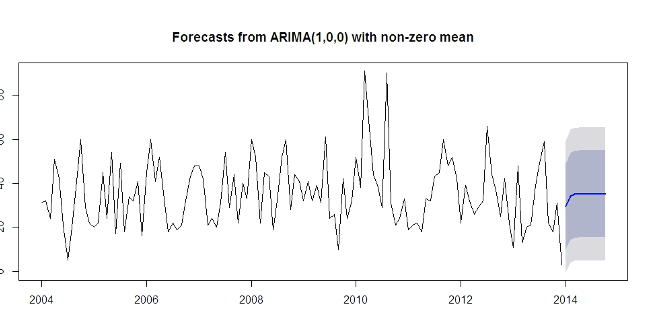
It has been estimated that the incidence of cancer will double between 2000 and 2020 and nearly triple by 2030. The study revealed that there will be an increase in the trend of cancer in Nigeria as from January 2014 to October 2014. The implication of this is that more cases of cancer will be reported for the next 10months which may increase death rate.
Only 5% of the global resources for cancer are spent in developing countries. The estimated rise in cancer incidence will have a greater impact on countries that have a low health budget and fragile or absent health systems. In addition, inadequate clinical services for life threatening diseases and poor distribution assist in prevalence. The issue of limited access and scope of services which does not allow multidisciplinary care, obesity and genetic mutation are also mentioned.
Total Score: 13/20
(65% on rubric scale)
— Decision:
✅ ACCEPT - Problem worth solving
Evidence Quality
7.3/10
⭐ Tier 1: 5📊 Tier 2: 0📄 Tier 3: 0💬 Tier 4: 0
Methodology
Time series analysis was carried out on the record of patient affected by cancer in Nigeria using the data generated from Ibadan Cancer Registry, Department of Pathology, University College of Hospital(UCH). The analysis took the Ljung box and Jenkins model approach. Data collected will be analyze using Time Series analysis(ARIMA,ACF AND PACF) on the record data of patient diagnosed with cancer in a period of ten years (2004-2013), at University College Hospital(UCH), Ibadan. This research will focus on the trend of cancer and predict the future trend of cancer in Nigeria using (Forecasting method). The Statistical package that will for the analysis is R. Language. The time series model used in Box-Jenkins forecasting are called autoregressive integrated moving average (ARIMA) models. Box-Jenkins modeling relies heavily on the use of three familiar time series tools: differencing, autocorrelation function(ACF) and the Partial autocorrelation function(PACF).
Technologies Used
ARIMAACFPACFR LanguageBox-Jenkins methodologytime series analysis
Dataset
The data for the study is secondary data which is extracted from the Ibadan Cancer Registry IBCR, Department of Pathology, University College Hospital, Ibadan (UCH) for the period of 10 years(2004-2013). The data contains monthly records of patients affected by cancer from January 2004 to December 2013, totaling 120 observations.
By fitting an ARIMA(1,0,0) MODEL for rate of patients affected by cancer in Nigeria, the value of the parameter was gotten to be 1. The corresponding fitted autoregressive model is Xt = (0.1722)Xt-1 + Et. And the AIC for the mode is 999.26. The forecast shows the forecast of the number of a patient that will be affected by cancer for the next 10 months, with point forecasts ranging from 29.45 patients in January 2014 to 35.14 patients by October 2014. The p-value for the Ljung-Box test is 0.6199, indicating that there is little evidence for non-zero autocorrelations in the forecast errors for lags 1-50.
Key Findings
1. The ARIMA(1,0,0) model provides an adequate predictive model for cancer patient records with AIC=999.26. 2. There will be an increase in the trend of cancer in Nigeria from January 2014 to October 2014. 3. The forecast errors are normally distributed with mean zero and constant variance. 4. The seasonal variation shows peaks every summer and troughs every winter. 5. More cases of cancer will be reported for the next 10 months which may increase death rate.
Limitations
The seasonally adjusted time series now just contains the trend component and an irregular component. The time plot of the forecast errors shows that the variance of the forecast errors seems to be roughly constant over time (though perhaps there is slightly higher variance for the second half of the time series).
Validation Status
Current Status
Human Review Pending
Method Selected:🤝 AI + Human (Recommended)
AI Validation:
✅ Completed Jun 01, 2026
Confidence:
88.6%
What this means
👀 A human expert is currently evaluating this project
📅 Review typically completes within 1-3 business days
Share your thoughts, ask questions, or provide feedback on this research.
No comments yet. Be the first to share your thoughts!
Oluwasegun Odesola
@segreen
I'm a researcher and data scientist at the intersection of artificial intelligence, algorithmic fairness, Financial and educational technology, with a …

Discussion (0)
No comments yet. Be the first to share your thoughts!